Package of Practice for Cultivation of Radish
Radishes thrive in well-drained, loose, loamy soil during cooler seasons, requiring consistent soil moisture and timely weeding for optimal root development. By maintaining proper row spacing and monitoring for common pests like aphids, you can protect crop health and ensure a productive harvest.
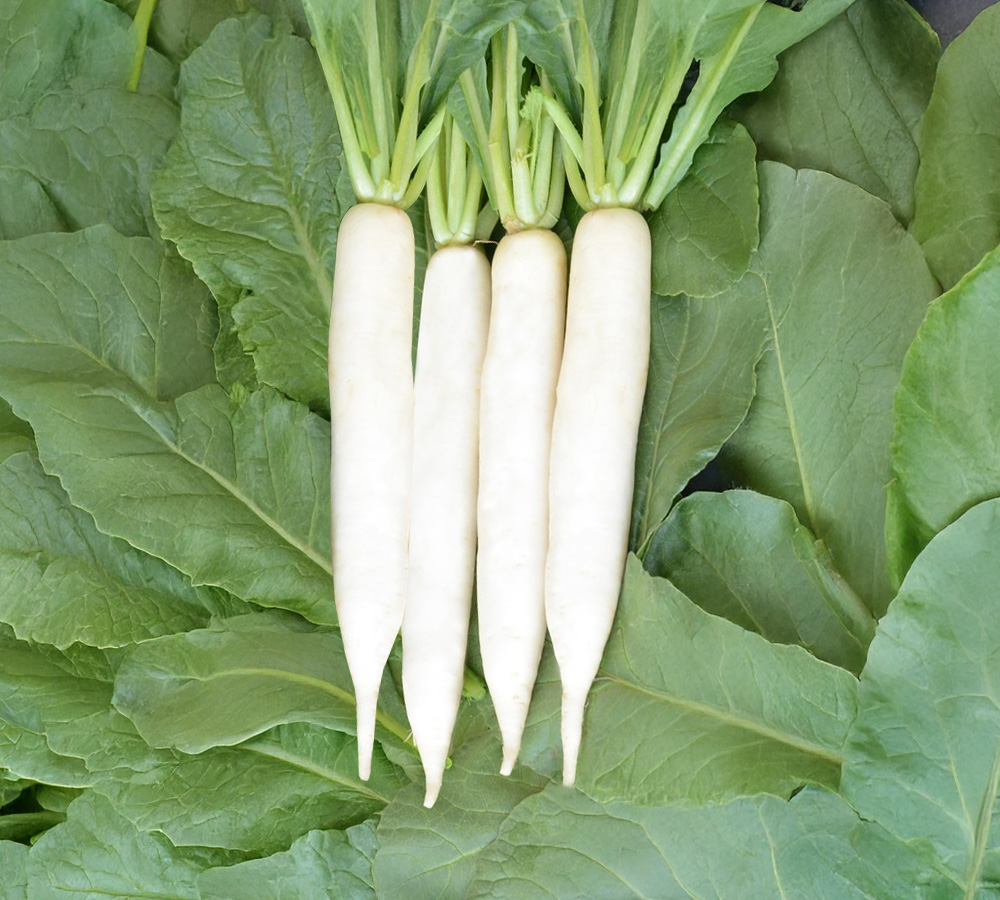
Climate: Temperate & Tropical
Selection of field/ land preparation practices:
Radishes thrive in light, loose, well-drained sandy loam soils rich in organic matter, with a slightly acidic pH between 5.5 and 7.0, The soil should be free of rocks and clumps, and at least 6-8 inches deep, to allow for proper root development and a smooth texture. Avoid heavy, compacted clay soils, as they can lead to malformed roots. Incorporating compost or well-rotted manure improves soil structure and fertility. 1-Plouging followed by 2-3 harrowing with fine tilth of soil followed by Ridges and furrow making
Sowing Season: Rabi, Summer
Seed Rate: 2 - 2.5 kg per acre.
Spacing: Row to Row: 50-60 cm
Plant to Plant: 8-10 cm Spacing:
Fertilizer dose per ha with timing:
It needs a balanced and adequate fertilizer supply.
Total N:P:K requirement @ 40:60:40 kg per acre.
Dose & Timing:
Basal Dose: Apply 50% N and 75% P, and 100% K as basal dose during final land preparation.
Top Dressing: 50% N and 25% P at 20-25 days after sowing
Irrigation: Radish needs optimum irrigation at emergence and at harvesting stage. Light soils and summer season need more frequent irrigation. It is advised to have running (light) irrigation in winter and rainy season.
Weed Control: 20-25 Days after sowing one weeding with soil loosening + Split dose application, plays crucial role for quality root development
Harvesting: Harvesting should be done at optimum moisture level (Vapsa Condition) to uproot complete root. After harvesting root washing is necessary to visible quality root and color
Expected Yield*: Average yield with standard agronomy practices will be around 20-25 MT/Acre *
(Yield data provided from trial averages with standard input. It may vary with agroclimatic conditions.)