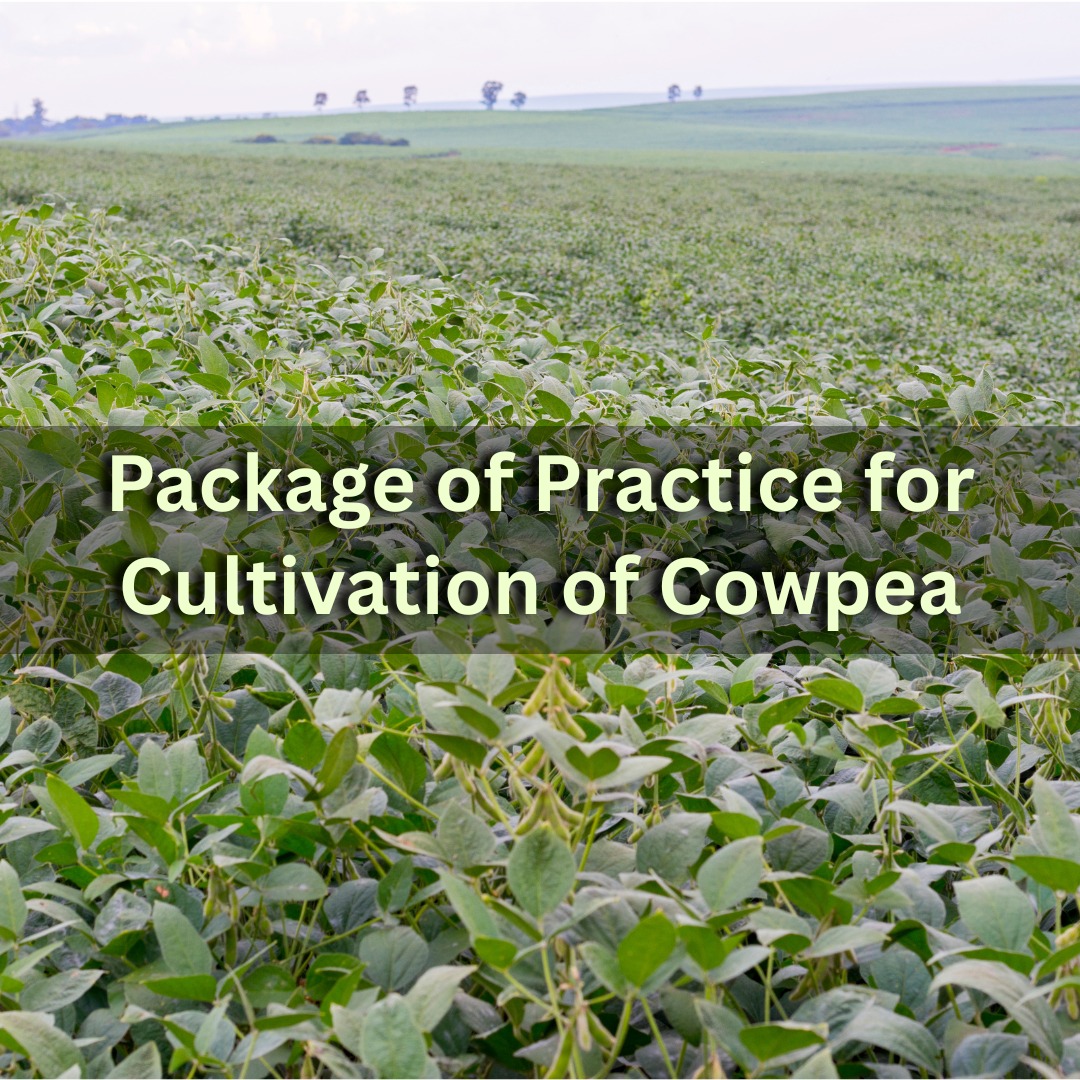
Package of Practice for Cultivation of Cowpea
Cowpea (Vigna unguiculata) is a versatile, drought-tolerant legume crop. Below is a general package of practices for its cultivation.
1. Climate and Soil
-
Climate: It is a warm-season crop that thrives best at temperatures between 20°C and 30°C. It is sensitive to frost and waterlogging.
-
Soil: Well-drained sandy loam or loam soils with a pH of 5.5–6.5 are ideal. It is known for its ability to grow well in poor, acidic, or marginal soils.
2. Land Preparation and Sowing
-
Preparation: Prepare the land to a fine tilth by performing 2–3 ploughings and harrowing.
-
Sowing Time:
-
Kharif: Onset of monsoon (June–July).
-
Rabi: October–November (in southern India).
-
Summer: February–March.
-
-
Seed Rate and Spacing:
-
Bushy types: 20–25 kg/ha; Spacing 30–45 cm (row to row) × 10–15 cm (plant to plant).
-
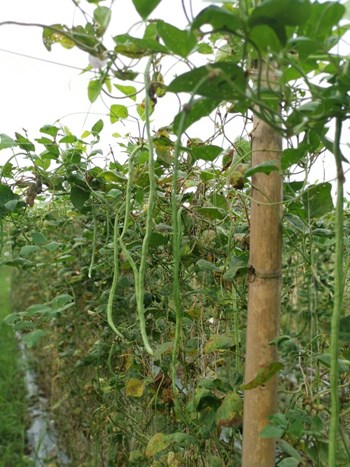
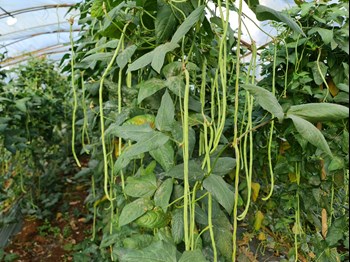
Trailing/Climbing types: 4–5 kg/ha; Spacing 1.5–2.0 m between rows.
-
3. Seed Treatment
To ensure uniform germination and protect against soil-borne pathogens:
-
Fungicide: Treat seeds with Carbendazim or Thiram (2 g/kg of seed).
-
Bio-fertilizer: Inoculate seeds with Rhizobium culture (10–20 g/kg of seed) to enhance nitrogen fixation, especially in fields where cowpea is being grown for the first time.
4. Nutrient Management
-
Organic: Apply 5–10 tonnes of Well-decomposed Farm Yard Manure (FYM) per hectare as a basal dose.
-
Chemical: A general recommendation is 20–25 kg N + 50–60 kg $P_2O_5$ + 20–30 kg $K_2O$ per hectare. Phosphorus is critical for root development and nodulation.
-
Note: As a legume, cowpea fixes its own nitrogen, but a small starter dose of nitrogen is often recommended for early growth.
-
5. Water and Weed Management
-
Irrigation: Though drought-tolerant, critical stages like flowering and pod formation require adequate moisture. Avoid water stagnation. In summer, irrigate at 7–10 day intervals.
-
Weeding: Keep the field weed-free during the first 30–45 days.
-
Chemical: Pendimethalin (0.75–1.0 kg a.i./ha) as a pre-emergence herbicide.
-
Manual: 1–2 hand weedings are usually sufficient.
-
6. Plant Protection
-
Pests: Keep an eye out for aphids, pod borers, and leaf-eating caterpillars. Use integrated pest management (IPM) practices, such as installing yellow sticky traps or using neem-based pesticides. For severe infestations, consult local agricultural extension services for recommended insecticides.
-
Diseases: Common issues include mosaic virus and leaf spots. Use resistant varieties and maintain field hygiene (removing infected plants).
7. Harvesting
-
Vegetable use: Harvest tender pods when they are well-filled but before the seeds bulge significantly.
-
Grain/Pulse use: Harvest when pods turn light straw or brown in color.
-
Drying: Dry pods in the shade to avoid seed cracking, then thresh, winnow, and clean. Store seeds at a moisture content of 10–12%.