Package of Practice for Cultivation of Beans (Bush)
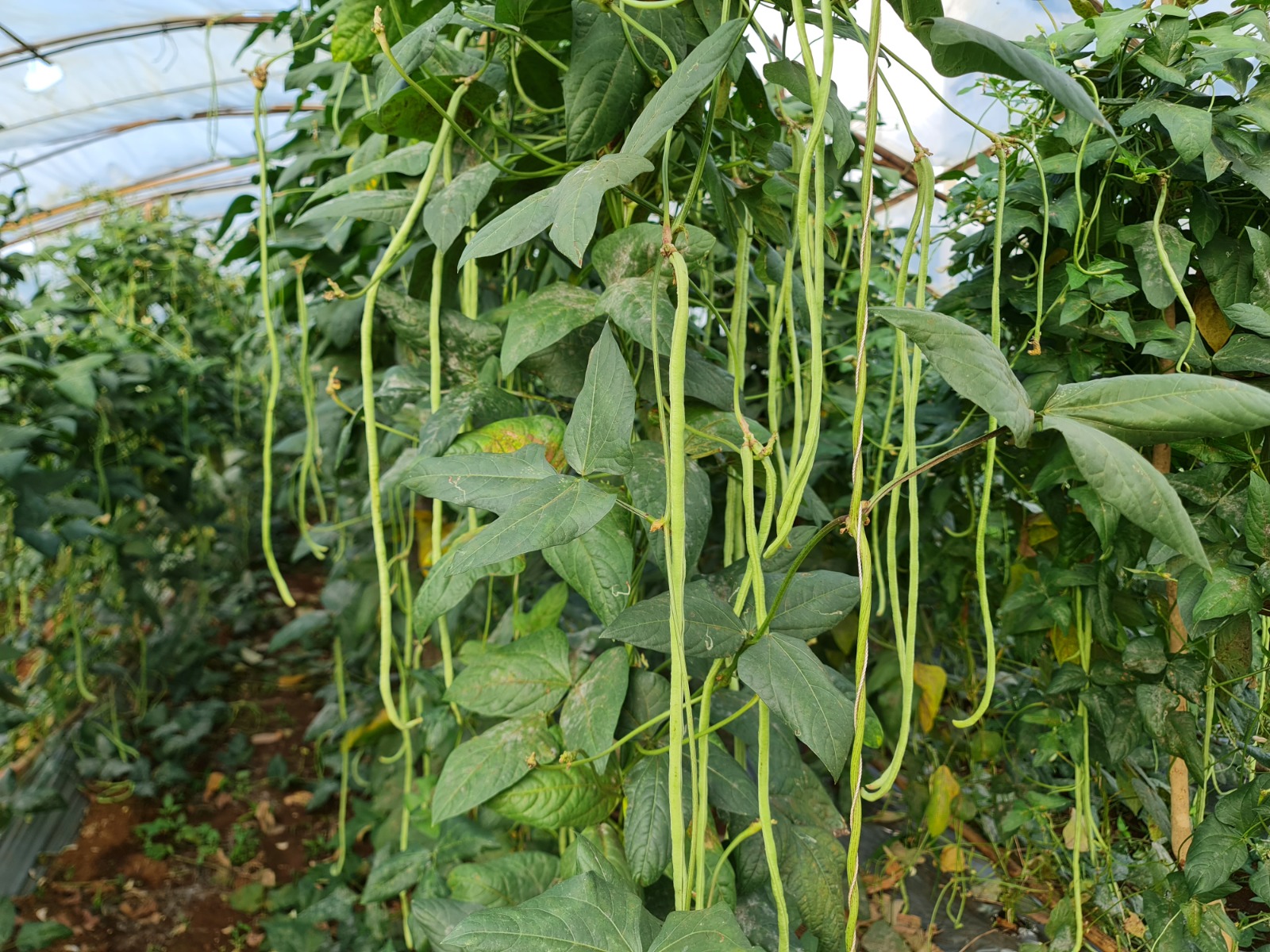
Bush beans are a highly efficient, high-yielding crop, perfect for maximizing production with minimal maintenance. These compact, self-supporting plants thrive in fertile, well-draining soil and are ideal for diverse climates. Success in bush bean cultivation relies on proper seed spacing, consistent moisture—especially during flowering and pod development—and timely pest management.
1. Climate & Soil
- Temperature: Optimum growth occurs between 18°C and 25°C. High temperatures (above 35°C) cause flower and pod drop.
- Soil: Light sandy loam or clayey loam soils that drain well and are high in organic matter are ideal.
2. Land Preparation & Sowing
- Preparation: Plough the field 2 to 3 times to a fine tilth. Mix 20-25 tonnes of Farmyard Manure (FYM) per hectare during the final ploughing to improve fertility.
- Seed Rate: Sow approximately 15-20 kg per acre for bush varieties.
- Spacing: Seeds should be sown on ridges or flat beds with a row-to-row spacing of 45 cm and plant-to-plant spacing of 10-15 cm. Depth should be 3-4 cm.
- Season: Best sown during July–August (Kharif) and January–February (Spring/Summer) in the plains.
3. Manures & Fertilizers
- Basal Dose: Apply a base fertilizer of 25 kg Nitrogen, 60 kg Phosphorus (P₂O₅), and 50 kg Potassium (K₂O) per hectare.
- Top Dressing: Apply the remaining Nitrogen (25 kg/ha) as a top dressing about 25-30 days after sowing.
- Note: Because beans are legumes, they fix their own Nitrogen; avoid over-fertilizing with Nitrogen to prevent excessive foliage growth over pod yield.
4. Irrigation
- Apply the first irrigation right after sowing.
- Maintain soil moisture at a 7-10 day interval, depending on the season and soil type.
- Flowering and pod formation are critical stages; ensure the soil does not dry out to prevent permanent flower drop.
5. Plant Protection
- Seed Treatment: Treat seeds with copper-based fungicides or Bavistin (2 g/kg) prior to sowing to prevent fungal diseases.
- Pests: Watch for aphids or beetles; manage with 0.1% Malathion or organic Neem oil sprays.
- Diseases: Manage Angular leaf spot or blights by rotating crops every 2 years and using Indofil M-45.
6. Harvesting
- Bush beans mature quickly. Pick the light green pods 50-60 days after sowing while they are still crisp, tender, and the seeds inside are small.
- Pick pods every 2 to 3 days; delaying harvest makes the pods tough and reduces further flower production.